When the Grid Fails: A Definitive Ranking of the Top 3 Portable Power Stations for 2026
In an era of unpredictable weather and aging infrastructure, a reliable backup power source is no longer a luxury—it’s a necessity. This article breaks down the best portable power stations on the market, comparing the user-friendly Jackery Explorer 1000 v2, the high-surge OUPES Mega 1, and the powerhouse BLUETTI AC200PL. Whether you need a lightweight "grab-and-go" solution for a quick blackout or a modular system to run your home essentials for days, we’ve ranked the top contenders to keep your life powered when the neighborhood goes dark.
2/16/20265 min read
The lights flicker, the hum of the refrigerator dies, and suddenly, your living room is quieter than a library during finals week. We’ve all been there. Power outages are no longer just a "once-in-a-decade" storm inconvenience; with aging grids and increasing weather volatility in 2026, having a reliable backup plan isn't just for "preppers" anymore—it’s practical adulting.
While gas generators have their place, they are loud, require fuel storage, and can't be used indoors. Enter the Portable Power Station (PPS). These giant batteries are silent, emission-free, and can sit right next to your couch while they keep your Wi-Fi and fridge running. But with the market flooded with options, which ones actually hold up when the grid goes dark?
We’ve narrowed it down to the top three electric generators—specifically portable power stations—that offer the best balance of capacity, output, and reliability. Here is the definitive ranking for getting you through the next blackout.
3. The Reliable All-Rounder: Jackery Explorer 1000 v2
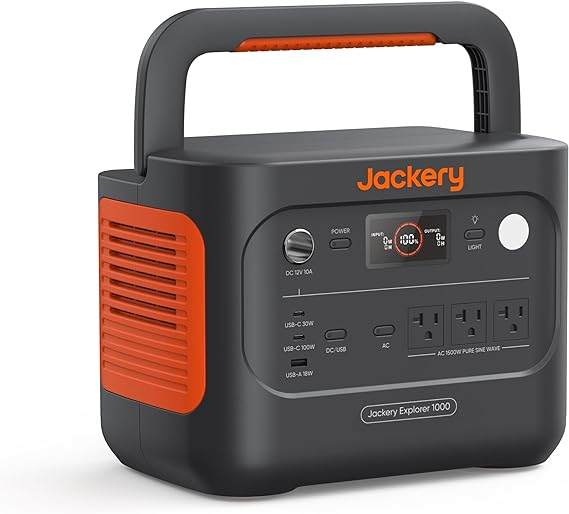
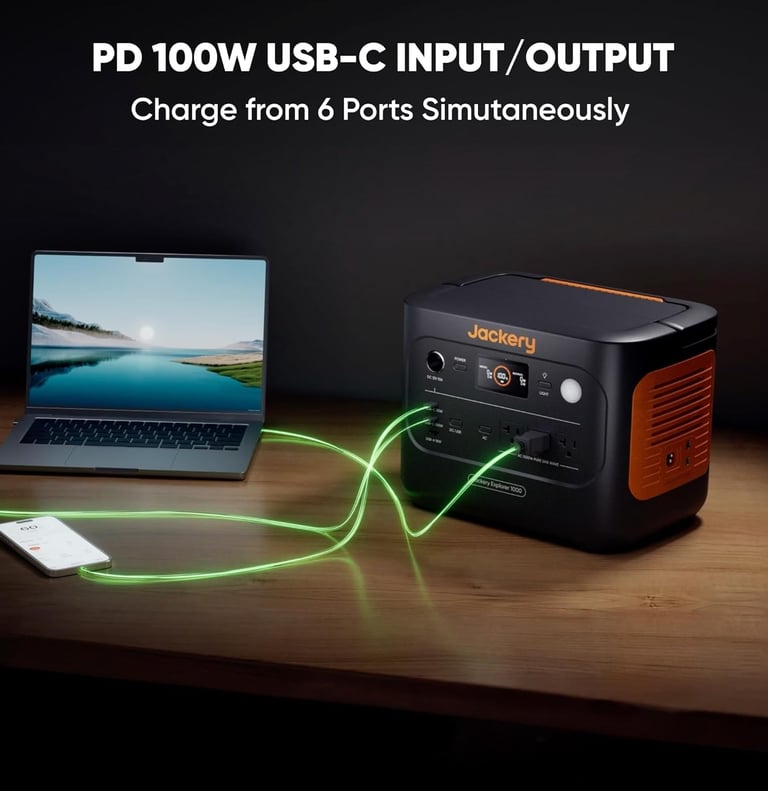
If you’ve spent more than five minutes researching portable power, you’ve seen the bright orange accents of a Jackery. They are essentially the "household name" of the industry, and for good reason. The Jackery Explorer 1000 v2 is the refined, upgraded version of their classic workhorse, designed specifically for those who want simplicity without sacrificing performance.
Why It’s in the Top Three
The "v2" is a significant leap forward. Jackery finally moved to LiFePO4 (Lithium Iron Phosphate) battery chemistry, which is a big deal. Why? Because it means this unit can handle over 4,000 charge cycles before hitting 70% capacity. In plain English: if you used it every single day, it would last you over a decade.
The Explorer 1000 v2 offers a 1070Wh capacity and a 1500W continuous output (with a 3000W surge). This is the "sweet spot" for most users. It’s powerful enough to run a full-sized refrigerator for about 10–15 hours or a CPAP machine for several nights, yet it only weighs about 23.8 lbs. It’s light enough to carry with one hand while you’re scrambling to find your flashlights.
Best Use Case: The "Grab-and-Go" Emergency
The Jackery is the king of portability. Its "ChargeShield 2.0" technology allows it to reach a full charge from a wall outlet in just one hour in emergency mode. If you see a storm brewing on the horizon, you can top this thing off faster than it takes to get through a grocery store line for bread and milk. It’s perfect for the "short but sharp" outage where you just need to keep the essentials running and the kids' tablets charged so they don't stage a mutiny.
2. The Heavy-Hitter Value: OUPES Mega 1 Portable Power Station
If the Jackery is the reliable sedan, the OUPES Mega 1 is the high-torque pickup truck. OUPES might not have the name recognition of the legacy brands yet, but in the 2026 market, they have become the "insider's choice" for those who prioritize raw power and surge capability over brand aesthetics.
The Power of the Surge
The standout spec of the Mega 1 is its 2000W continuous output paired with a massive 4500W surge. Most 1kWh-class power stations struggle when you plug in a high-draw appliance like a microwave, a coffee maker, or a sump pump. These devices often require a massive "kick" of energy to start their motors. The Mega 1 handles that kick without breaking a sweat.
With a 1024Wh capacity, it sits in the same neighborhood as the Jackery in terms of total energy storage, but its ability to pull more "juice" at once makes it more versatile for a kitchen-focused backup. It features 13 different outputs, including four AC outlets, meaning you don't have to play "musical chairs" with your power cords.
Expandability and Speed
One of the most underrated features of the Mega 1 is its expandability. You can chain it with OUPES B2 expansion batteries to reach a total of 5120Wh. This turns a portable unit into a "home-lite" backup system. Additionally, it supports a combined AC and solar input of 2200W, meaning if you have enough panels, you can theoretically run your critical loads and recharge the battery at the same time during the day. It also functions as a UPS (Uninterrupted Power Supply) with a 20ms switchover time—fast enough to keep your desktop computer from rebooting when the grid fails.
1. The Powerhouse Champion: BLUETTI AC200PL
When "good enough" isn't enough, you look to the BLUETTI AC200PL. This unit takes the top spot because it bridges the gap between a "portable" station and a "whole-home" solution. It is the gold standard for anyone who wants to maintain a semblance of normal life during a multi-day power outage.
Massive Capacity and "Lifting" Power
The AC200PL boasts a 2304Wh capacity—more than double that of the Jackery or the OUPES Mega 1. This is the difference between keeping your fridge running for a few hours versus keeping it running for nearly two full days on a single charge.
Its 2400W continuous output is impressive, but BLUETTI includes a "Power Lifting" mode that allows the unit to run resistive heating devices (like space heaters or electric kettles) up to 3600W. During a winter power outage, the ability to run a small heater without tripping the inverter is quite literally a lifesaver.
The Modular Ecosystem
What truly cements the AC200PL as the #1 choice is its ecosystem. It’s fully modular. You can connect it to BLUETTI’s B210P, B230, or B300 expansion batteries, scaling your total energy up to a staggering 8448Wh. If you’re facing a week-long outage after a major hurricane or blizzard, this modularity allows you to keep adding "gas tanks" to your system.
Technical Superiority
The charging specs are equally elite. It supports 2400W AC Turbo charging, which can get this massive battery from 0% to 80% in about one hour. Even more impressive is its 1200W solar input. If you have a decent solar array, you can effectively live "off-grid" indefinitely, as the unit can recharge faster than most people can deplete it during the day.
Essential Buying Guide: What to Look For
When choosing between these three (or any other generator), there are three metrics that actually matter:
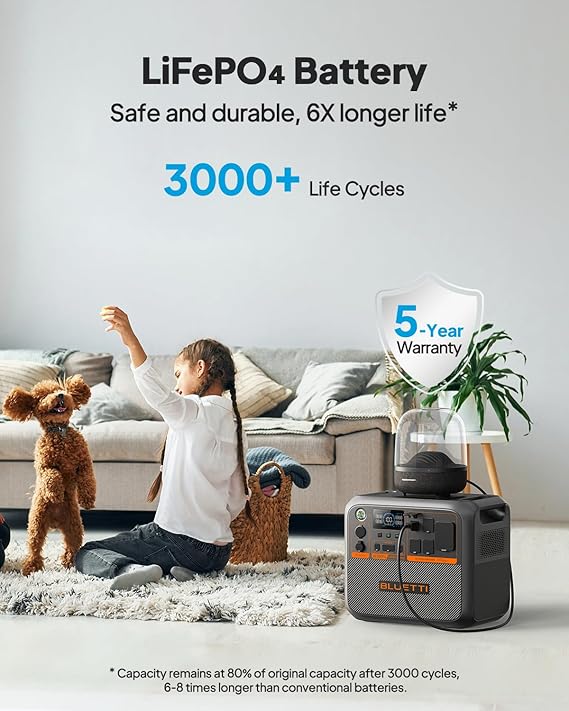
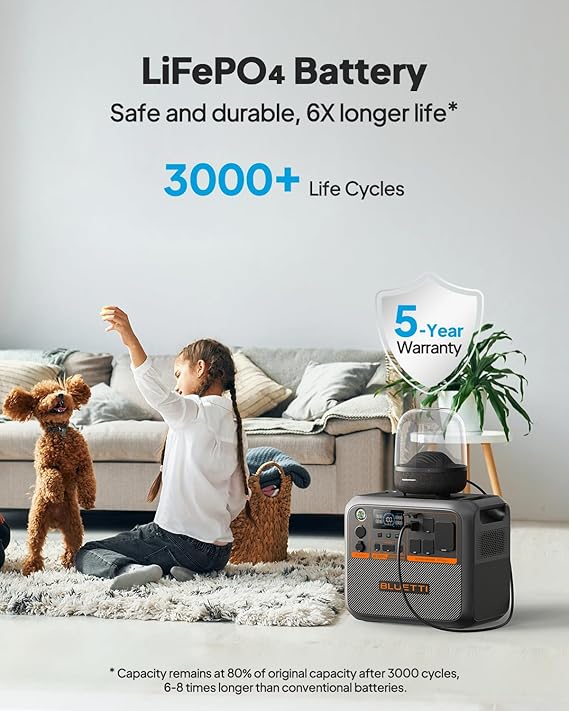
LiFePO4 Chemistry: Do not buy an older Lithium-Ion (NCM) model in 2026. They are lighter, but they only last about 500 cycles compared to the 3,000–4,000 cycles of LiFePO4. All three of our top picks use LiFePO4 for maximum safety and longevity.
Pure Sine Wave Inverters: All the models listed here use Pure Sine Wave technology. This ensures the electricity coming out of the outlets is as "clean" as what comes out of your wall, which is vital for sensitive electronics like laptops, CPAPs, and modern high-efficiency refrigerators.
The "Watt-Hour" Reality Check: Always remember that "1000Wh" doesn't mean you get exactly 1000Wh. Inverter efficiency usually hovers around 85–90%. Always over-buy your capacity by about 20% to ensure you have the buffer you need.
Final Verdict
If you want something you can easily carry from the garage to the kitchen and just want the "iPhone of power stations," go with the Jackery Explorer 1000 v2. It’s foolproof.
If you have heavy-duty appliances and want the best "bang for your buck" with the option to grow your system later, the OUPES Mega 1 is the smartest value play on the market right now.
But if you are serious about emergency preparedness—if you want to run the fridge, the microwave, the Wi-Fi, and a space heater for days on end—the BLUETTI AC200PL is the undisputed champion. It is an investment in peace of mind.
Whatever you choose, remember: the best time to buy a generator is before the sky turns grey. Stay powered, stay safe, and maybe keep a few extra board games handy for when the Wi-Fi finally does give out.
Contact
Questions? Reach out anytime, we’re here to help.
Phone
electric generators.co@gmail.com
© 2025. All rights reserved.